If you are planning a weekend in nature and among authentic villages in Abruzzo, Pescasseroli is a destination that cannot be missed. Considered the "capital" of the Abruzzo, Lazio and Molise National Park, Pescasseroli is a small town that surprises with its welcoming atmosphere, the charm of its historic center and the beauty that surrounds it.
In this article we will guide you to discover what to see in Pescasseroli in two days, suggesting an ideal itinerary to savor every nuance.
From the village to the ruins of Castel Mancino to the impressive Park Visitor Center, you will discover that even in a short time it is possible to have a complete and fulfilling experience.
Day 1: Explore the village and ruins of Castel Mancino
An authentic historic center
The first thing to see in Pescasseroli is its historic center.
Don't let its reputation as the main center of the Park fool you: in size, Pescasseroli maintains the intimate dimension of a small mountain village, inhabited by about two thousand people. This makes it all the more pleasant to stroll unhurriedly through its flower-filled alleys and quiet little squares.
The heart of the village is characterized by:
- Narrow alleys, often adorned with flowers and manicured plants;
- window frames carved from the characteristic gentile stone, a white limestone material mined from the mountains of the Park;
- an atmosphere of authentic hospitality that still resists time and tourist standardization.
Sipari Palace
In the heart of Pescasseroli's historic center, Palazzo Sipari is one of the most emblematic places to understand the history and identity of the village. It stands on the site of an ancient baronial palace that belonged to the Massa Barons and was partially destroyed by fire. Its current architectural conformation dates back to 1839, when Pietrantonio Sipari - grandfather of philosopher Benedetto Croce - completed its renovation and expansion.
The palace is a perfect example of late Renaissance aristocratic architecture, enriched by elegant classical forms. From the 19th century until 2006 it was inhabited without interruption by the Sipari family, one of the most influential in Marsica, a leading figure in Italian political and cultural life between the 19th and 20th centuries. Benedetto Croce was born here and his cousin, the Honorable Erminio Sipari, founder of the Abruzzo National Park and pioneer of environmental protection in Italy, also lived here.

Today the building is declared an asset of special artistic and historical interest, protected by the Monuments and Fine Arts Office. The facade houses three marble plaques commemorating Benedetto Croce, Erminio Sipari and Maria Cristina Sipari, the last descendant who transformed the building into a house-museum open to the public.
The guided tour will make you relive the atmosphere of the daily life of the Sipari family and the illustrious guests who passed through these rooms, including Victor Emmanuel III and the Duke of Aosta.
Church of St. Peter and Paul
The spiritual and historical heart of the village is the Church of St. Peter and Paul, dating back to the 9th century. Although it has undergone various reconstructions due to earthquakes and invasions, the building retains elements of great charm.
The jewel of the church is the Black Madonna of the Incoronata, venerated by the local population and a pilgrimage destination. Visiting this church will allow you to connect with the deep religiosity and sense of community that characterize Pescasseroli.

Carmel Church
Behind the oldest quarter of the town is the striking Church of Carmel. Built in the early 18th century as a private chapel of the Gentile family, it stands along the ancient road that connected the abbey to the castle. Today it is an interesting stop for those who want to discover the village's lesser-known religious history.
Plistia Course
For a taste of the most scenic part of the village, walk along Corso Plistia. This street, which climbs to the upper part of the town, offers splendid views of the village and the surrounding mountain landscape.
From here you can enjoy views from the rooftops of Pescasseroli to the ski resort's ski lifts, surrounded by the pristine nature of the park.
Bear Fountain
Before leaving the center, don't forget to make a stop at the Fontana degli Orsi (or San Rocco Fountain), located at the northern entrance to the town. The fountain, decorated with two bronze bear heads, is one of Pescasseroli's most beloved symbols.

Here you can enjoy a sip of the freshest water and read the engraving commemorating the inauguration of Abruzzo National Park.
Trekking in Castel Mancino
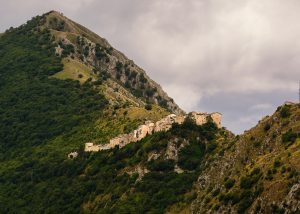
Next, what can you see in Pescasseroli? What we recommend is to devote the afternoon to an easy and scenic hike: trekking to the ruins of Castel Mancino.
From the Plistia Course take Castle Street, then follow Trail B3 through a lovely coniferous forest. After about 30 minutes of walking, you will reach the castle ruins.
In addition to the historical and scenic value of the place, a visit to Castel Mancino will also introduce you to a romantic legend related to the birth of Pescasseroli: that of Pesca and Serolo, the two young lovers whose tragic fate supposedly gave rise to the town's name.
Day 2: Park Visitor Center
The second day of your stay can be devoted to discovering one of the most interesting and informative attractions for those visiting Pescasseroli: the Abruzzo, Lazio and Molise National Park Visitor Center.
An experience for the whole family
The Visitor Center offers a unique opportunity to observe some of the Park's iconic animals up close. The specimens housed were not captured in the wild, but come from difficult situations that prevent their return to the wild.
Currently you can observe:
- European brown bears;
- deer;
- porcupines;
- roebucks.
It is important to know that some enclosures may occasionally be empty; in fact, the Center provides spaces for any animals in need of care.
The Apennine Garden
Also located within the Visitor Center is the Apennine Garden, where plant species typical of the Park's various environments are cultivated.
Numerous birds, including squirrels, woodpeckers, titmice, creepers and finches, live freely among the trees and shrubs and have colonized this area spontaneously. Strolling through the garden is a perfect opportunity to get closer to local biodiversity and enjoy a relaxing moment surrounded by nature.
Pescasseroli: a weekend of history, nature and tradition
In conclusion, if you are wondering what to see in Pescasseroli in two days, the answer is simple:
- breathtaking views;
- Historic churches and noble palaces;
- Nature trekking and timeless legends;
- Educational experiences and close encounters with local wildlife.
Pescasseroli is the ideal destination for those seeking a weekend of nature, culture and relaxation. Two days are enough to be enraptured by its charm...but you'll probably already want to return by the end of your visit.